
Diabetes and Eye Health: Why Early Detection Matters
Diabetes affects more than just blood sugar—it can also quietly damage your eyes. Over time, high glucose levels can weaken the small blood vessels in the retina, leading to diabetic retinopathy, a leading cause of vision loss in adults.
Many patients don’t realize they’re experiencing retinal damage until their vision is already affected. That’s why early detection is so important. With advanced screening tools like RetEval, your Missouri City optometrist can identify diabetic eye disease in its earliest stages—before symptoms begin.
What Is RetEval and How Does It Work?
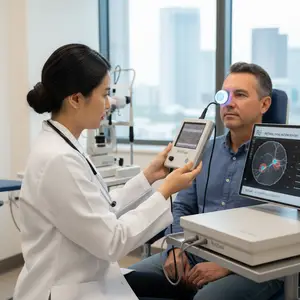
RetEval is an advanced, non-invasive device that evaluates how well your retina is functioning. Instead of relying solely on visible signs of disease, RetEval measures the electrical response of retinal cells to light.
Here’s how it works:
- A soft sensor is placed beneath your eye.
- A flash of light stimulates your retina.
- The device records your retina’s response in real time.
This painless test takes about 10 minutes and doesn’t require eye dilation. It can detect functional stress in the retina long before structural damage appears, making it an essential part of any diabetic eye exam.
Learn more about RetEval technology
The Risks of Waiting: What RetEval Helps Prevent
Without routine screening, diabetic eye disease can progress without warning. By the time changes in vision occur, irreversible damage may have already taken place.
RetEval testing helps your eye doctor catch early warning signs of:
- Retinal bleeding or micro-hemorrhages
- Macular edema (swelling of the central retina)
- Scar tissue that distorts or detaches the retina
- Abnormal blood vessel growth and leakage
By identifying these conditions early, your optometrist can intervene before vision is permanently affected.
Patient Experience: What to Expect During a RetEval Test
The RetEval screening is designed with patient comfort in mind. There are no drops, no dilation, and no discomfort.
Here’s what you can expect during your visit:
- The test takes less than 10 minutes.
- No recovery time is needed.
- It can be added to your routine diabetic eye exam with ease.
Patients appreciate how quick and simple the process is—especially compared to more invasive procedures. Schedule your diabetic eye exam now
RetEval Supports Collaborative Diabetic Care
RetEval doesn’t just benefit your eye health—it contributes to your overall diabetes management. Results from the test can help your optometrist collaborate with your primary care provider or endocrinologist to refine your treatment plan.
If RetEval results show early retinal stress, your care team may recommend:
- Medication adjustments
- Diet or glucose control improvements
- Nutritional supplements to support retinal health
This team-based approach ensures that your vision care services in Missouri City are aligned with your broader health goals.
Why Annual Diabetic Eye Exams Are Essential
Even if your vision seems fine, diabetes can cause silent, progressive damage to your eyes. That’s why scheduling an annual diabetic eye exam with RetEval screening is one of the best ways to protect your long-term vision.
Early detection leads to early treatment—and better outcomes.
Take Control of Your Vision Health
If you have diabetes, don’t wait for symptoms to signal a problem. Protect your sight with proactive care from the best eye doctors in Mccourt Plaza.
Schedule your diabetic eye exam today with Today's Vision Quail Valley—your trusted optometrist near me. Book your exam now
Frequently Asked Questions (FAQs)
What is RetEval used for?
- RetEval is a non-invasive test that helps detect early signs of diabetic retinopathy by measuring how well your retina responds to light stimulation.
How long does a RetEval test take?
- The screening typically takes about 10 minutes and does not require any preparation or recovery time.
Do I need to have symptoms to benefit from RetEval?
- No—RetEval is most effective when used before symptoms appear. It helps detect hidden changes in the retina due to diabetes.
Is RetEval covered by insurance?
- Coverage may vary. The team at Today's Vision Quail Valley will gladly help verify your benefits before your appointment.
Who should get a RetEval screening?
- Anyone with diabetes should receive regular eye exams with RetEval, especially if they haven’t had a screening in the past year.